
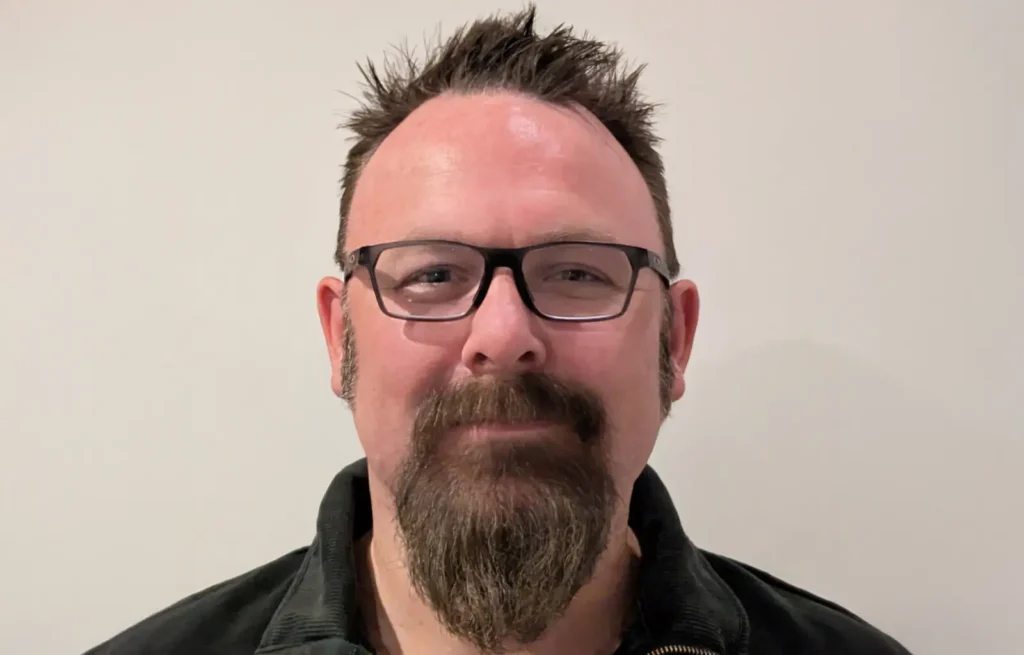
Q: Will, you are working for Mary Frances Trust as a GPimhs Lived Experience Worker, based in Epsom & Ewell. Can you explain your role and how it fits within the GPimhs service?
Will: “As a GPimhs Lived Experience Worker (LEXP) with Mary Frances Trust, my role is to provide one-to-one support for clients who are recovering from a variety of mental health challenges. I work closely with my teams’ mental health practitioners and link workers to ensure that support is person-centred and recovery-focused, bridging the gap between clinical care and community resources. My role is about more than practical support—it’s about offering hope, reassurance and showing that recovery is possible. I am also able to provide community-based support over a longer period—usually between 2 to 9 months—which allows for detailed, ongoing collaboration towards the client’s identified goals and the development of practical mental health strategies for the future”.
Q: Can you give us examples of how you are supporting people at a Lived Experience Practitioner?
Will: “When it comes to helping my clients, I view it as walking alongside them and discussing what the tools they need to overcome a given situation. I offer empathy, hope and practical guidance grounded in first-hand understanding of mental health recovery, medication, substance use, physical traumas, and navigating social and structural systems. This can include helping people make sense of their experiences without shame, supporting self-advocacy, communication with professionals, assisting with navigating services and appointments, rebuilding daily life skills / routines after a crisis, as well as reconnecting with their identity, strengths and community. A key part of the work is bridging the gap between clients and available services, preparing the clients for those interactions, attending with them if required, and helping the organisations better understand a person’s context. I believe in a relational, strengths-based approach to support —rooted in mutuality and focused on empowering clients toward long-lasting recovery.”
Q: Why do you think Lived Experience Practitioners are important within GPimhs?
Will: “I believe LEXPs are vital within GPimhs because we offer something that goes beyond clinical expertise: hope and understanding from someone who has truly “been there”. By sharing our own journeys through mental health challenges and recovery, we can help clients feel genuinely seen, heard, and understood—especially when they may feel anxious, alone, or unsure about the future. This role supports GPimhs’ early intervention strategy by offering reassurance, practical coping skills and guidance that can prevent difficulties from escalating into crisis. Being an LEXP means helping people believe in themselves when they need it most, and ensuring GPimhs delivers care that is not just effective, but human. Importantly, LEXPs help keep the service grounded in recovery. We demonstrate through our presence that recovery is possible (for some) and that people are more than their mental ill health. This strengthens GPimhs by ensuring support is not only clinically effective, but also compassionate, empowering and shaped by the voices of those who use it.”
Q: What do you enjoy most about your role?
Will: “As someone who has been through my own recovery pathway, I adore being a Lived Experience Practitioner because it allows me to connect with people in a meaningful way. This role didn’t exist when I was going through my various experiences so to be able to make a tangible difference in others’ lives is wonderful. I can positively use my story as a tool. It allows me to build relationships where people feel heard, understood and less alone is enormously valuable. I find it incredibly rewarding to see the small and big steps people take towards recovery, and to help them navigate both clinical services and community support also”.
Q: What led you to work in mental health?
Will: “I have worked in the NHS for a Primary Care Network [ie. groups of GP practices that work together, and with other health and care providers] for several years before my move to MFT / GPimhs. I was very aware of the volume of clients looking for support in the locality, so I decided to get involved and try to make a difference and support that team. I very much enjoyed the face-to-face contact with clients so when the LEXP role presented itself, it looked like the perfect fit.”
Q: What do you do to look after your wellbeing outside of work?
Will: “I believe it’s very important to get back to nature when possible so I try to go for walks in the woods when I can. I find this very calming (even when the weather is miserable). I also have a full roster of projects / tasks I can dip into when the mood is just right. I try to switch off (social media) and concentrate on my mental health as much as possible outside of that.
Q: What’s an interesting thing to know about you?
Will: “I did a little bit of motorcycle racing back in 2017 – 2022. For anyone who is interested, (and as a possible piece of motivational media), there’s an excellent documentary (currently free on Amazon Prime) called ‘Dream the Impossible’. It follows the world’s first motorcycle race team with disabled riders who compete against able bodied competitors. It goes about as well as that sounds. It’s powerful stuff and I hope you enjoy it if you give it a look”.
“Being a Lived Experience Practitioner means helping people believe in themselves when they need it most, and ensuring GPimhs delivers care that is not just effective, but human.”
What is GPimhs?
Our GP Integrated Mental Health Service (GPimhs) offers expert emotional wellbeing support from your GP surgery via our team of Community Connectors and Lived Experience Practitioners.
If you are 18+ and registered with a GP in Surrey, you can get referred to the service by your GP or Practice nurse or request a referral from your GP. Once your referral has been processed, you’ll be offered an appointment.
Face-to-face, telephone or online appointments generally last for around 30 minutes and we may offer you more than one session. Each appointment is an opportunity for you to talk about what is happening in your life and how this is making you feel. We can then help you to make sense of that and support you to make a plan to address the things that matter to you.
This plan won’t just cover your mental health and physical health but will include supporting you with things that may be impacting your life and mental health such as finding a job, getting out of debt, managing relationships or ensuring you are linked to the appropriate housing advice services.
You will be linked with different specialists in the service team as part of your personalised, mental health and wellbeing plan. This may include access to:
– specialist mental health interventions
– medication advice
– mental health professionals including those with expertise managing emotions and eating disorders.
If you would need extra support, you may be assigned a Lived Experience Practitioner (such as Will) who can offer peer support and practical assistance to people using the service regain control over their lives and their own unique recovery journey.
In particular, the Lived Experience Practitioners support the smooth transition of people using the service to other Mental Health services, by helping them to complete recovery and crisis plans for example. Within a relationship of mutuality and information sharing, they will promote choice, self-determination and opportunities for people accessing the service.